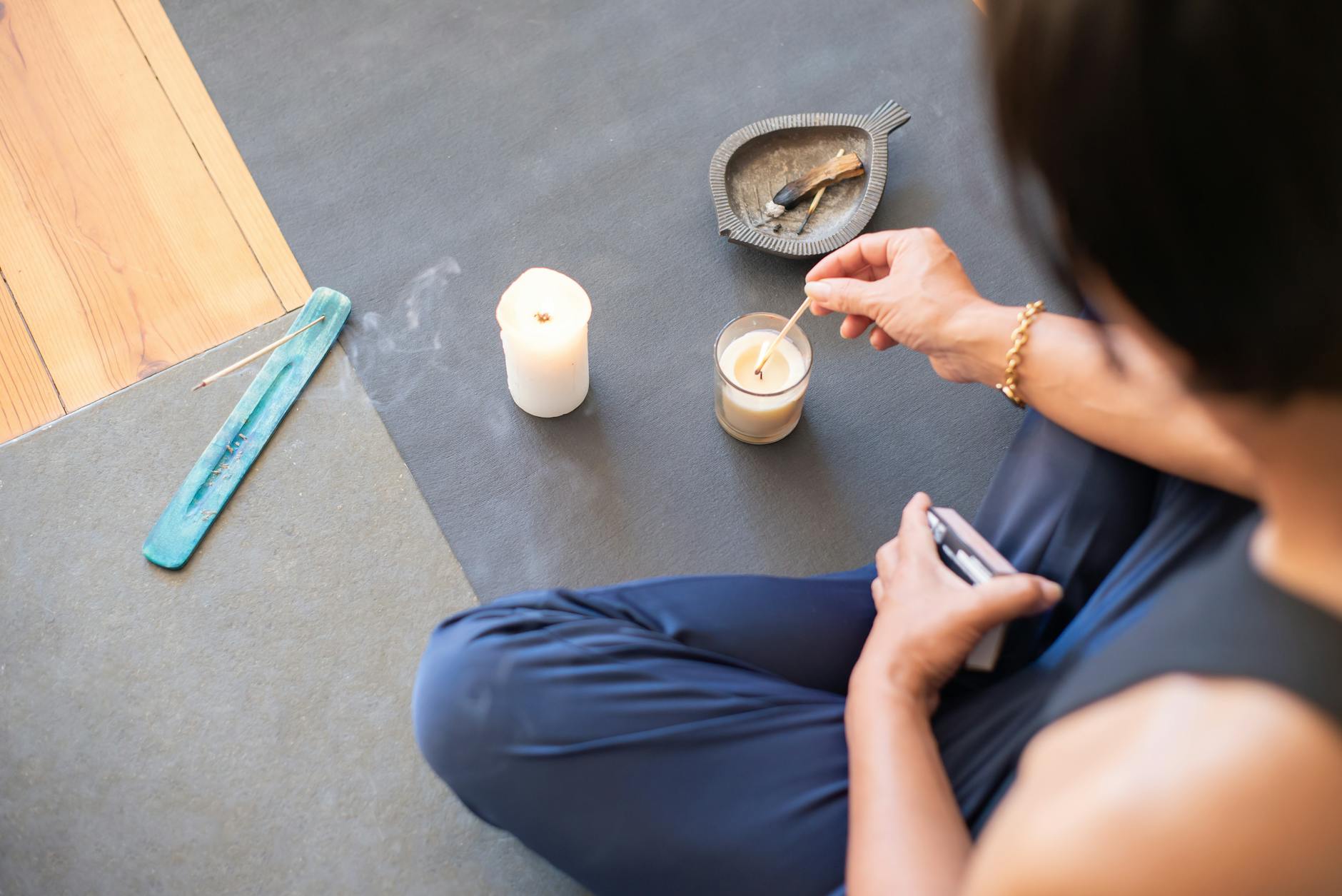
The most reliable way to build a daily mindfulness practice is to make it very small, tie it to something you already do every day, and decide in advance what counts as success. Five minutes after your morning coffee, done on most days, will usually outlast a plan for 40 minutes of perfect meditation that falls apart in week two.
Most people who quit do not lose interest. They set a goal that only works on an ideal day, miss a few days, feel they have failed, and drop it. This article lays out a practical way around that: how to pick a size, a cue, a format, and a plan for bad days. The habit advice here is common-sense behavior design, not a clinical protocol, and it works only if you adjust it to your life.
Start smaller than feels useful
A behavior that is easy to repeat tends to get repeated. So start with 2 to 5 minutes. That can feel almost silly, and that is the point. The aim in the first month is not the benefit of meditation. It is the habit of showing up.
A simple progression:
- Weeks 1 to 2: 3 minutes a day.
- Weeks 3 to 4: 5 minutes a day.
- Month 2: 8 to 10 minutes if it feels easy.
- Later: 15 to 20 minutes, only if you want it.
No one has proven an ideal length for everyone, so there is no need to chase a number. Ten steady minutes over a year beats 30 minutes for a month. If you want a first routine to follow, the guide on how to start meditating as a beginner walks through one.
Attach it to a cue you already have
Motivation is unreliable. A cue is steadier. The idea, often called habit stacking, is to link the new behavior to an existing one: “After I pour my coffee, I sit for 5 minutes.”
Good cues happen every day at about the same time and place:
- After brushing your teeth in the morning
- After you sit down at your desk, before opening email
- After you park the car at work or home
- After you get into bed, before picking up your phone
- After lunch, before returning to your screen
Pick one cue and stay with it for three or four weeks before judging it. Leaving a cushion, chair, or timer visibly in place helps. If you rely on remembering to meditate “sometime today,” it will slip. Morning suits many people because fewer things have interrupted the day, and evening suits others as a way to wind down. The best time is the one you can protect.
Choose a format that matches your life
Daily mindfulness does not have to mean sitting on a cushion with your eyes closed. There are two broad types, and many people mix them.
| Type | Examples | Time needed | Good for |
|---|---|---|---|
| Formal practice | Seated meditation, body scan, guided audio | 5 to 30 minutes | Building attention |
| Informal practice | Mindful walking, eating, washing dishes, commuting | 1 to 5 minutes inside existing tasks | Carrying awareness into the day |
On a busy day, informal practice can be the whole thing. Feel your feet on the way to the mailbox. Taste the first three bites of lunch. Listen to the full sound of the shower. These count. The article on the difference between mindfulness and meditation explains why they belong in the same picture.

Using guidance
Guided audio helps many beginners because it gives the mind something to follow. Free recordings are available through many libraries and community groups, and some meditation apps offer free tiers and some charge subscriptions. You do not need an app; a plain timer works fine. Whatever you choose, avoid switching tools every week, because novelty is not the same as practice. If you take a paid course, the US National Center for Complementary and Integrative Health suggests checking the instructor’s qualifications.
Build in a minimum viable session
Decide ahead of time what the smallest acceptable version of your practice is. For example: three slow breaths. On a day when you are rushed, sick, or traveling, you do the minimum instead of nothing.
This does two things. It keeps the habit of showing up, and it removes the all-or-nothing thinking that causes people to quit. Many people find that once they sit down for three breaths they continue for a few minutes anyway, and if you do not, that is fine.
Write the plan down in one sentence: “After [cue], I will [practice] for [time]. On hard days I will [minimum].”
Plan for the days it falls apart
You will miss days. Plan for it.
- Try not to miss twice. One missed day is noise. Two in a row can start a new habit of not doing it. If you miss, do the minimum the next day.
- Do not make up for lost time. Doubling the next session adds pressure and makes the habit feel like a debt.
- Expect dull and restless sessions. Some days your mind will be busy the whole time. That is a normal session, and returning to your anchor counts as practice. If this frustrates you, read what to do when you cannot focus during meditation.
- Review monthly. If a cue is not working, change the cue instead of pushing harder.
Common reasons practice stalls include a cue that varies too much, a session that is too long, no quiet spot at home, and a vague goal like “be calmer.” Replace that goal with a behavior you can check off: “sat for 5 minutes.”
Track lightly and measure what matters
A paper calendar with an X for each day is plenty. Tracking makes the habit visible, but do not turn it into a score to defend.
Rather than judging each session, check in after four weeks with a few plain questions:
- Did I notice stress or tension earlier than before?
- Did I pause before reacting at least once?
- Do I come back to the practice without dread?
Changes are usually subtle, and they may not appear at all in the first month. Many people notice them in daily life more than in the session. Research on mindfulness programs, as summarized by NCCIH, suggests benefits for stress and some other problems, but the quality of studies varies and long-term effects are less clear, so treat your own check-ins as information and not as proof that it is or is not working.
Keep it safe and realistic
For most people, short daily mindfulness is considered low risk, but it is not risk-free. NCCIH cites a 2020 review in which about 8 percent of participants had a negative effect, most often anxiety or depression, similar to the rate for psychological therapies. Some people find meditation or breathing exercises uncomfortable, and they are free to stop. If sitting in silence brings on intense anxiety, flashbacks, or a feeling of detachment, stop, shorten the session, try an eyes-open or movement-based practice, or work with a trauma-informed teacher or therapist.
Mindfulness can complement care, but it is not a replacement for treatment of depression, anxiety disorders, or other conditions. Consider seeing a doctor or mental health professional if low mood, worry, or stress has lasted for weeks and affects your sleep, work, appetite, or relationships, or if you are using alcohol or other substances to cope. If you are having thoughts of harming yourself, seek help right away: in the US, call or text 988 to reach the 988 Suicide & Crisis Lifeline, and elsewhere use your local emergency number or crisis line. The article on whether mindfulness helps with stress discusses what mindfulness can and cannot realistically do.
A simple 30-day plan
If you want something concrete, try this:
- Pick your cue today and write the sentence: “After [cue], I will sit for 3 minutes.”
- Set a timer. Sit upright but comfortable and feel the breath at the nose or belly.
- When your mind wanders, which it will many times, note it and return.
- Mark the calendar after each session.
- At day 15, move to 5 minutes if it feels easy.
- At day 30, review: keep going, adjust the cue, or extend the time.
For small daily steps to tick off, use the daily practice checklist.
Where this comes from
The mindfulness and safety statements here draw on the National Center for Complementary and Integrative Health’s pages on meditation and mindfulness. The habit advice (small steps, cues, a minimum version) is common-sense behavior design rather than a published clinical standard, and it is offered as a suggestion to try, not a proven method. This is general information, not medical advice. Guidance and research change, so check the source and talk to a qualified clinician about your own situation.