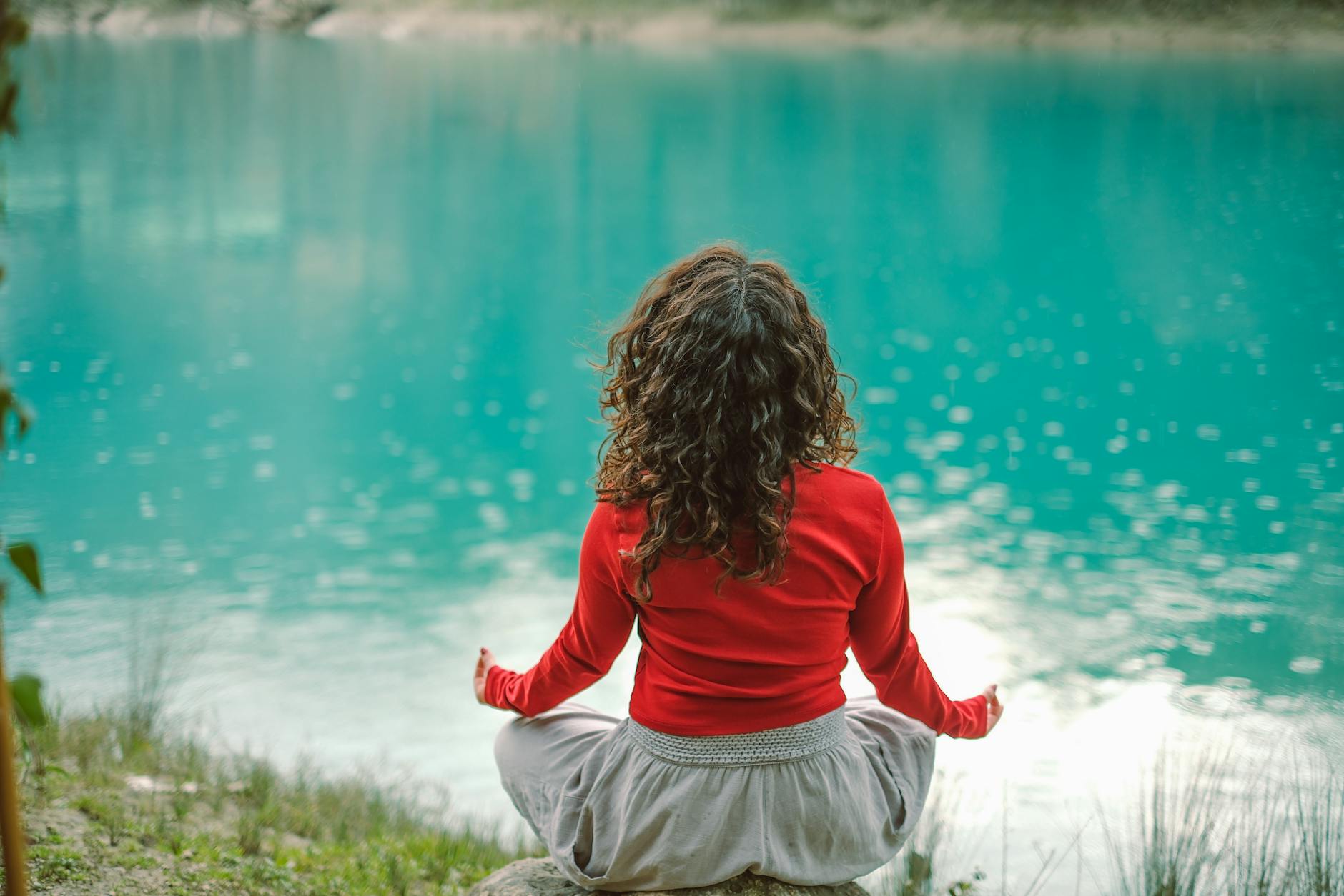
Mindfulness is a quality of attention: noticing what is happening in your surroundings, body, and mind as it happens, without immediately judging it. Meditation is a formal practice, usually done for a set time, that can train that kind of attention. Put simply, meditation is one way of exercising mindfulness, and mindfulness is what you can bring into the rest of your day.
The two terms get swapped constantly because they overlap, and because much of what is sold as “mindfulness” is really guided meditation. Knowing the difference helps you pick a practice that fits your life, and stops you from thinking you need a cushion and 30 quiet minutes to be mindful.
Quick definitions
The US National Center for Complementary and Integrative Health (NCCIH) defines mindfulness as maintaining attention or awareness on the present moment without making judgments. You can be mindful while drinking tea, listening to a coworker, or feeling your feet as you walk.
NCCIH describes meditation as a variety of practices focused on mind and body integration, used to calm the mind. Some meditation techniques have you focus on one thing, such as the breath, a sound, a visual image, or a repeated word (a mantra). Meditation usually has some structure: a posture, a time, and an object of focus.
So mindfulness meditation is a specific type of meditation designed to develop mindfulness. But there are meditation styles that are not primarily mindfulness-based, and there are ways of being mindful that are not meditation at all.
Side-by-side comparison
| Feature | Mindfulness | Meditation |
|---|---|---|
| What it is | A quality of awareness | A practice or exercise |
| When you do it | Anytime, during ordinary activities | Usually a set session |
| Typical length | Moments to continuous | Varies, often several minutes or more |
| Needs a quiet spot? | No | Often helpful, not required |
| Example | Noticing you are tense during a call | Sitting for 10 minutes following your breath |
| Can exist without the other? | Yes, to a degree | Yes, some styles are not mindfulness-based |
A useful comparison is fitness. Meditation is like a workout session. Mindfulness is like the strength you build and use throughout the day, such as carrying groceries or climbing stairs.
How they work together
Formal meditation gives you a controlled setting to build the skill. In a 10-minute sit, you rest attention on the breath, notice when your mind drifts, and return. Each return is one repetition of the core move: noticing, then redirecting.
Informal mindfulness uses that skill in real life. You notice that you are rereading the same email paragraph because your mind is elsewhere. You notice irritation before you snap. You feel the cup in your hand instead of scrolling while you drink.
Structured programs combine both. NCCIH describes Mindfulness-Based Stress Reduction as pairing meditation with group discussion and practical strategies, and Mindfulness-Based Cognitive Therapy as combining mindfulness with the principles of cognitive behavioral therapy. If you want to try the formal side, the guide on starting meditation as a beginner lays out a first session.
An illustration of one ordinary day
This is a made-up example, not a report of any real person. In the morning someone sits for 8 minutes following their breath: that is meditation. At work they notice their shoulders have crept toward their ears while reading email and let them drop: that is mindfulness. In a tense meeting they take one breath before replying: mindfulness again. In the evening they walk slowly for a few minutes after dinner, attending to their steps, which can be either, depending on whether they are noticing or just thinking about tomorrow. The formal sit supplies practice, and the small moments supply real-life use.
How to tell what you are actually doing
If you are unsure whether an activity counts, ask three questions:
- Is my attention on something I can name, such as the breath, a sound, or my steps?
- Do I notice when it drifts?
- When it drifts, do I come back without scolding myself?
If you can answer yes to all three, you are practicing mindfulness, whatever the activity is called.
Types of meditation people confuse with mindfulness
Not every practice labeled meditation is mindfulness. Common ones include:
- Focused attention: You hold attention on one object, such as the breath, a sound, or a word. This is the base of most mindfulness training.
- Open monitoring: You notice whatever arises, thoughts, sounds, sensations, without picking a single anchor. This is closely tied to mindfulness.
- Loving-kindness: You direct good wishes toward yourself and others. It trains warmth more than present-moment attention.
- Mantra meditation: You repeat a word or phrase silently. Some forms are taught as a separate technique with their own instructors.
- Body scan: You move attention through the body part by part, which is both a meditation and a mindfulness exercise.
- Movement practices: Walking meditation, tai chi, and gentle yoga can include mindfulness when attention stays on the sensations of movement.
Mindfulness without meditation
You can practice mindfulness without ever sitting down to meditate. Examples:
- Single-tasking: Do one thing at a time for a few minutes, such as writing an email without switching tabs.
- Mindful eating: Take the first three bites of a meal slowly, noticing taste and texture.
- Walking with attention: For one block, notice your steps, the air, and sounds instead of your phone.
- Pausing before responding: Take one breath before answering a difficult message.
- Check-ins: Several times a day, ask yourself what you are thinking, feeling, and sensing in your body.
These are small, but they are real practice. The guide on building a daily mindfulness practice shows how to build them into a routine.
Meditation without much mindfulness
It is also possible to meditate in a way that is not very mindful. If you sit for 20 minutes, drift into a daydream, and judge yourself the whole time, you are going through the motions. Some people also use meditation to escape feelings, which is the opposite of mindful awareness. And some traditions aim at concentration, devotion, or other outcomes that differ from secular mindfulness programs.
This is why the label matters less than the quality of attention. A session is useful when you are actually noticing and returning, not just sitting still.
Common misunderstandings
- “Mindfulness means a clear, empty mind.” It does not. Thoughts keep arising, and mindfulness is noticing them instead of being carried off by them.
- “Meditation is relaxation.” Relaxation can be a side effect, but the aim of mindfulness practice is awareness, and sessions can feel restless or uncomfortable.
- “If I am not sitting, I am not practicing.” Short, informal moments of attention count, and for many people they are what carries practice into the day.
- “Being mindful means being positive.” Mindfulness includes noticing unpleasant feelings as clearly as pleasant ones.
- “Mindfulness is only about stress.” Stress is a common reason people try it, but the skill is general attention.
Which should you start with?
- If you have only a few minutes scattered through the day: start with informal mindfulness, such as check-ins and single-tasking.
- If you want to train attention more deliberately: add a short formal sit, 5 to 10 minutes.
- If you feel stressed and want a tool for it: both are used, and the article on whether mindfulness helps with stress covers what to expect.
- If you get restless sitting still: try walking meditation or a body scan.
- If focusing on your breath makes you anxious: pick another anchor such as sounds or your feet, and read whether breathing exercises help anxiety.
If you are still unsure, run a one-week experiment with the smallest option, such as three check-ins a day or one 5-minute sit each morning. At the end of the week, notice which one you actually did. That is the better starting point for you, whichever sounds more impressive. A timer is all you need, and many libraries and community groups offer free guided recordings.
Safety and when to get help
NCCIH says these practices are usually considered to have few risks, while noting that research on harms is limited. It cites a 2020 review in which about 8 percent of participants had a negative effect, most often anxiety or depression. On benefits, NCCIH reports that mindfulness-based approaches did better than no treatment for anxiety and depression in studies and helped people manage stress, but that study quality varied and long-term effects are unclear.
Some people, particularly those with trauma histories or serious mental health conditions, can feel more distressed when they turn attention inward, and some people simply find meditation uncomfortable. If it brings up panic, flashbacks, or a sense of unreality, you can stop, shorten or change the practice, and talk to a clinician or a trauma-informed teacher. NCCIH advises not using meditation to replace conventional care.
See a doctor or mental health professional if anxiety, low mood, or stress persists for weeks, interferes with daily life, or leads you to rely on alcohol or other substances. If you are having thoughts of harming yourself, seek help right away. In the US, call or text 988 to reach the 988 Suicide & Crisis Lifeline. Elsewhere, use your local emergency number or a crisis line in your country. For sudden severe symptoms such as chest pain or fainting, call your local emergency number.
Where this comes from
This article uses the National Center for Complementary and Integrative Health’s pages on meditation and mindfulness for definitions, program descriptions, evidence, and safety. The comparison table, examples, and lists of styles are plain-language summaries meant to help you choose, not clinical categories. This is general information, not medical advice. Research and guidance change, so check the current version at the source and talk to a qualified clinician about your own situation.